As a self-proclaimed travel warrior, I wasn't worried about getting culture shock in China. Surely by now the abundant stamps in my passport and numerous currencies in my wallet would act like a shield against the physiological perils of Chinese cultural nuances... My diabolical plan was foiled though, as my super traveling powers were disabled by locally manufactured kryptonite (I mean come on, they produce everything.) So although I wholeheartedly endorse people to travel, I would advise caution to those of you that hyperventilate when the Canadians cook their bacon differently or when the Germans use a green-woman traffic light.
My expedition to the middle kingdom started in Shanghai (meaning above the sea), a bustling metropolis on the country's eastern seaboard. Once a sleepy fishing village, this economic powerhouse has surpassed Shenzhen and Guangzhou
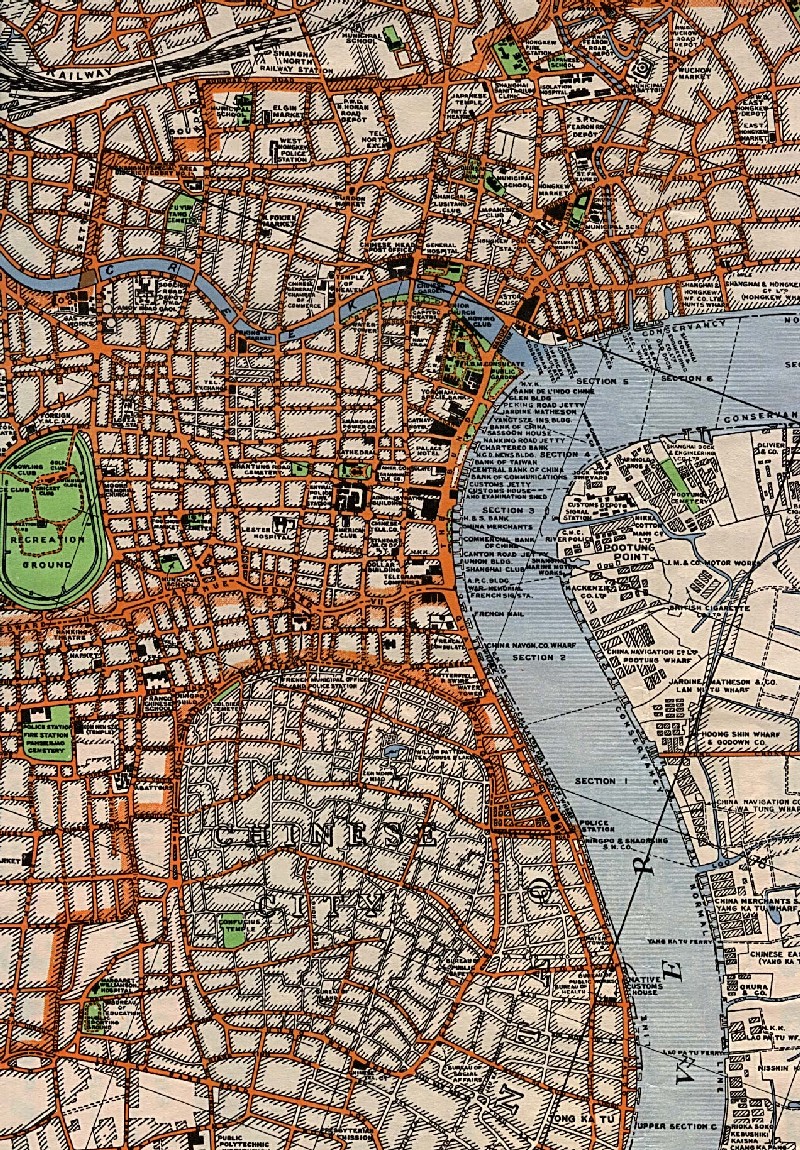
 as China's crown jewel. Shamefully, I didn't know much about the city before my trip, hell I couldn't even place Shanghai on a map! Which means there's a high probability you can't either... hence the map below. (My apologies to those of you who majored in Sino-cartography or grew up flying to Hongkong on the weekends, you probably know Chinese geography like I know the contents of my purse).
Since I flew into Shanghai during the early morning hours, I was able to view the city from the skies. It was an endless patchwork of old communist housing, red-brick roofs and modern apartment buildings, connected by long meandering rivers of concrete. Even from the air, Shanghai looked like a series of contradictions, a clash of civilizations evolving so quickly that it manifested itself on the physical landscape.
This was evident once we touched down, as new-world Chinese roads met old-world Chinese traffic, complete with multiple collisions and angry red-faced mainlanders. A three wheeled tractor-car (is the only way I could describe it) had flipped over, spilling its contents across all four lanes of traffic. I haven't seen many trucks dump their loads before, but seeing the tons of Doufu strewn across the road was hilarious. My driver muttered something under his breath, and I could imagine him saying "great, you hold up traffic AND spoiled dinner."
 Once in Pudong, I was overwhelmed by the density of high rises and sky scrapers - Shanghai made downtown Singapore look like American farmland in the 1940's (think Grapes of Wrath). The city was littered with a flock of cranes, working in unison to expand the already crowded horizon with dozens of additional mega structures. I watched them stack steel girders like Lego blocks, raise pillars and clear debris... Wow, I thought, they wanted these buildings built yesterday.
After settling into the hotel, I made plans for a sumptuous dinner on The Bund. Situated on the banks of the Huangpu River, the historically international area houses some of the best views and finest dining in all of Shanghai. I've included a excerpt about the origins of The Bund below, courtesy of Wikipedia (picture included).
 The Bund was home to many international banks and embassies.
As night fell and the temperature dropped, I found myself marveling at the neon-lights lining the city like Vegas during Christmas. I had inhabited the city for less than 12 hours and already felt transformed by its size, its endless identical streets and the breakneck speed at which it was expanding. The uniqueness of Shanghai was most poetically captured by a traditional Chinese junk I saw traveling down the length of the Bund - carrying a 150 foot digital billboard.

I went to bed that night with my head spinning, overwhelmed by experiencing the familiar coupled with the unexpected... which is what traveling is all about. What else did Shanghai have to offer? Check out Part II of "Bunderful Shanghai" to follow next week!
My expedition to the middle kingdom started in Shanghai (meaning above the sea), a bustling metropolis on the country's eastern seaboard. Once a sleepy fishing village, this economic powerhouse has surpassed Shenzhen and Guangzhou
as China's crown jewel. Shamefully, I didn't know much about the city before my trip, hell I couldn't even place Shanghai on a map! Which means there's a high probability you can't either... hence the map below. (My apologies to those of you who majored in Sino-cartography or grew up flying to Hongkong on the weekends, you probably know Chinese geography like I know the contents of my purse).
Since I flew into Shanghai during the early morning hours, I was able to view the city from the skies. It was an endless patchwork of old communist housing, red-brick roofs and modern apartment buildings, connected by long meandering rivers of concrete. Even from the air, Shanghai looked like a series of contradictions, a clash of civilizations evolving so quickly that it manifested itself on the physical landscape.
This was evident once we touched down, as new-world Chinese roads met old-world Chinese traffic, complete with multiple collisions and angry red-faced mainlanders. A three wheeled tractor-car (is the only way I could describe it) had flipped over, spilling its contents across all four lanes of traffic. I haven't seen many trucks dump their loads before, but seeing the tons of Doufu strewn across the road was hilarious. My driver muttered something under his breath, and I could imagine him saying "great, you hold up traffic AND spoiled dinner."
 Once in Pudong, I was overwhelmed by the density of high rises and sky scrapers - Shanghai made downtown Singapore look like American farmland in the 1940's (think Grapes of Wrath). The city was littered with a flock of cranes, working in unison to expand the already crowded horizon with dozens of additional mega structures. I watched them stack steel girders like Lego blocks, raise pillars and clear debris... Wow, I thought, they wanted these buildings built yesterday.
 After settling into the hotel, I made plans for a sumptuous dinner on The Bund. Situated on the banks of the Huangpu River, the historically international area houses some of the best views and finest dining in all of Shanghai. I've included a excerpt about the origins of The Bund below, courtesy of Wikipedia (picture included).
The word "Bund" comes from the Urdu word band, meaning an embankment, levee or dam. "Bund" is pronounced to rhyme with "fund". The term was brought to India (where it came to be pronounced as "bund") by either the Mughals in at the beginning of the 16th century. There are many "bands" to be found in Baghdad, even today. There are numerous sites in India, China, and Japan which are called "bunds". However, "The Bund" as a proper noun almost invariably refers to this stretch of embanked riverfront in Shanghai.
The Bund was home to many international banks and embassies.As night fell and the temperature dropped, I found myself marveling at the neon-lights lining the city like Vegas during Christmas. I had inhabited the city for less than 12 hours and already felt transformed by its size, its endless identical streets and the breakneck speed at which it was expanding. The uniqueness of Shanghai was most poetically captured by a traditional Chinese junk I saw traveling down the length of the Bund - carrying a 150 foot digital billboard.

I went to bed that night with my head spinning, overwhelmed by experiencing the familiar coupled with the unexpected... which is what traveling is all about. What else did Shanghai have to offer? Check out Part II of "Bunderful Shanghai" to follow next week!


 Each of the suites had these great little terra cotta animals hanging out at the doorstep. This little piggy and I became very good friends!


